Backdrop CMS continues to prove itself as a strong foundation for organizations that value longevity, performance, and control over their web platforms. A great example comes from the bridge engineering world, where two closely related sites — BridgeSight and PGSuper Resource Center—demonstrate how Backdrop can power both a commercial product site and a technical knowledge hub.
A niche, high-value domain
BridgeSight operates in a highly specialized space: software for bridge engineers. Founded by engineers, the company develops tools for designing and analyzing precast concrete bridges, along with training and custom development services.
Their flagship offering, PGSuper Professional, builds on an open source foundation—PGSuper, originally developed by the Washington State Department of Transportation. This combination of open source and proprietary enhancement is mirrored not just in their software, but in their web strategy as well.
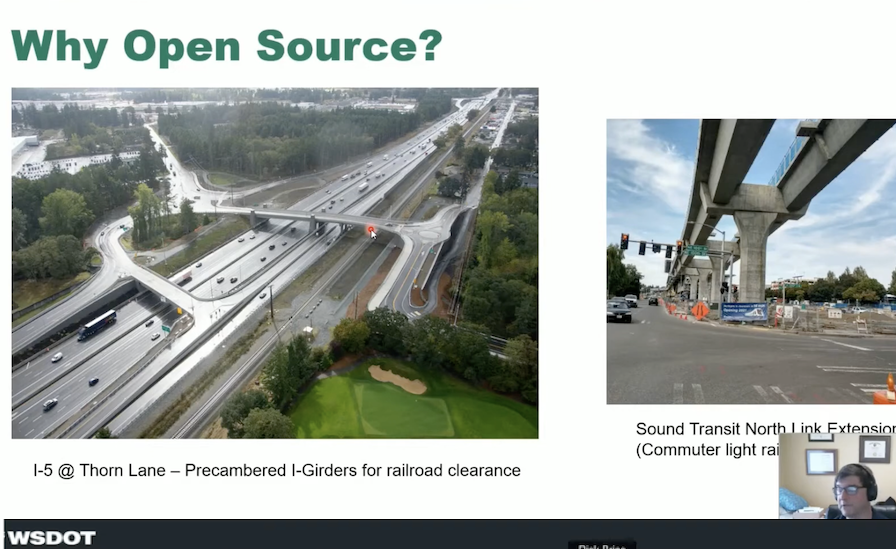
Notably, PGSuper has been part of the open source ecosystem for nearly 30 years—long before open source was mainstream or even widely considered within municipal and government environments. That longevity speaks not only to the durability of the software itself, but also to the value of open collaboration in highly specialized engineering domains.
Two sites, one ecosystem
The BridgeSight web presence is split across two sites:
1. bridgesight.com — Product and company hub
The main site focuses on:
- Product marketing (PGSuper Professional, BridgeLink, and related tools)
- Consulting and custom development services
- Training offerings
- News and release announcements
It serves as the commercial front door—clear messaging, product positioning, and calls to action. The content highlights advanced features like 3D visualization, reporting, and integration with engineering tools such as AASHTOWare and CAD systems.
2. pgsuper.com — Documentation and community resource
The PGSuper site plays a different role:
- Documentation and feature overviews
- Downloads and version guidance
- Educational content about bridge design workflows
- A resource hub for both free and professional users
It emphasizes the open-source roots of PGSuper and provides deep technical detail about capabilities such as load rating, structural analysis, and compliance with AASHTO standards.
Why Backdrop CMS works here
This dual-site setup is a strong example of where Backdrop CMS shines.
Content flexibility
Both sites handle very different content types:
- Marketing pages and product descriptions
- Technical documentation
- Download portals
- News and updates
Backdrop’s structured content model makes it possible to manage all of this without overengineering.
Long-term stability
Engineering software customers expect reliability—not just in tools, but in documentation and access. Backdrop’s focus on backward compatibility and stability aligns well with that expectation, especially compared to faster-moving CMS ecosystems.
Open source alignment
There’s a philosophical match here:
- PGSuper is open source
- Backdrop CMS is open source
Using Backdrop reinforces the same values: transparency, control, and sustainability.
Multi-site consistency
Running bridgesight.com and pgsuper.com as separate but related properties suggests a maintainable, possibly shared architecture—something Backdrop handles well with its lightweight core and flexible deployment patterns.
Final thoughts
Backdrop CMS may not always be the loudest name in the CMS space, but examples like BridgeSight and PGSuper show where it excels: powering durable, content-rich, and purpose-driven websites.
For organizations balancing open source values, technical depth, and long-term maintainability, this is exactly the kind of architecture that makes sense—and keeps working year after year.
https://youtu.be/9fGdUWAjuS4?si=7EXIEn0eJsAu1kfe